
Is Hair Fall After PRP Normal? Why It Happens & When to Worry
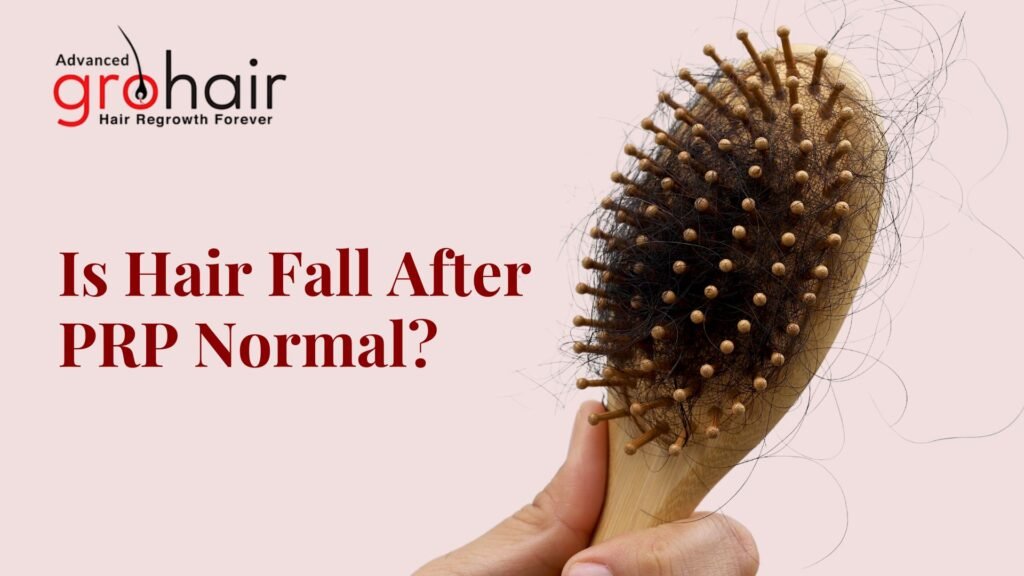
After PRP treatment, noticing increased hair fall can feel confusing and even alarming. You go in expecting growth, only to see more strands shedding, which naturally raises concern.
However, this early shedding is a commonly observed and healthy response. Hair specialists see it often, and it usually signals that your hair follicles are entering a new growth cycle.
PRP Treatment (platelet-rich plasma) is a trusted treatment for hair thinning that uses your own blood to strengthen follicles and support regrowth. It is safe, natural, and effective. The initial shedding can be surprising, but it’s a temporary phase of the recovery process.
Understanding why this shedding happens, what’s normal, and how PRP works beneath the surface helps make the process clearer and far less worrying.
What Is PRP and How PRP Works for Hair
PRP therapy might sound technical, but it’s based on a very simple idea. Your blood has platelets, and platelets carry potent factors of growth. These growth factors assist in repairing tissues, cells and also stimulating growth.
In a PRP session, you have your little blood drawn. It is rotated in a machine until the platelet-rich substance is separated. It is the golden layer which is packed with growth factors.
Once this PRP is injected into your head, it goes directly to the hair follicles. This helps the follicles
- get better blood flow,
- produce stronger strands,
- stay in the growing phase longer,
- and recover from damage or miniaturisation.
This is the reason why PRP is applied globally to treat hair loss. It enhances the follicular strength, is beneficial to hair and can also prevent or reverse premature loss of hair.
PRP hair treatment doesn’t work like a transplant. It doesn’t “create” new follicles. Instead, it helps the follicles you still have become healthier and more productive.
Why Does Hair Fall After PRP Happen?
Now for the question everyone asks.
Why does hair fall more after PRP when the goal is to grow it?
This is the reason why PRP is applied globally to treat hair loss. It enhances the follicular strength, is beneficial to hair and can also prevent or reverse premature loss of hair. Weak or miniaturised hair usually sits in the shedding phase longer. These hairs are ready to fall, but stay attached loosely.
When PRP activates the follicles, it pushes these weak strands out sooner. That’s why the shedding happens. It’s not damaged. It’s a reset.
Doctors call it shock loss or treatment shedding. It’s temporary and completely normal. It is just that the follicles are changing to a healthier cycle where new and stronger hair can grow.
Imagine it is sweeping away the old leaves to give way to new ones. The shedding makes space for better growth.
PRP Hair Fall Timeline: What to Expect Week By Week
Timeline | What Happens | What You May Notice |
Week 1 to 2 | The scalp reacts to the injections and starts adjusting to the treatment. | Mild soreness or tenderness, slight warmth on the scalp, and early shedding begin. |
Week 3 to 6 | Old, weak hairs fall out as the follicles reset and prepare for new growth. | Shedding becomes more noticeable, and density may look slightly worse, but this is expected. |
Months 2 to 3 | Follicles begin producing new baby hairs, and overall texture improves. | Tiny new hairs appear near the hairline or parting, shedding reduces, and hair feels healthier. |
Months 4 to 6 | Stronger regrowth phase begins, and hair quality improves. | Thicker strands grow in, density increases, and hair feels fuller and stronger. |
Months 6 to 12 | PRP results reach their peak as follicles stabilise and maintain growth. | Visible new growth, long-term stability, normal shedding restored, and overall hair health improves. |
This table gives readers a clear, confidence-boosting pathway of what to expect after PRP, helping them trust the process and stay consistent with their PRP journey.
How PRP Affects Hair Follicles
PRP works because it delivers a high concentration of growth factors to the follicle. These growth factors
- improve the health of the root,
- increase cell activity,
- help revive follicles that are slowing down,
- and encourage thicker, stronger hair.
In men and women with pattern hair loss, the follicles gradually shrink. This shrinking leads to thinner strands. PRP helps slow this shrinking process and strengthens the hair cycle.
It reactivates still-active follicles and provides the support they need to produce healthier hair. That is why early treatment works best, and consistent sessions give the strongest results.
When Is Hair Fall After PRP Normal vs Excessive?
Here’s how you know whether your shedding is normal.
➜Normal Shedding
- happens within the first 2 to 6 weeks
- gradually reduces as time goes on
- new baby hairs start to appear
- hair starts looking healthier around month 3
➜Excessive or Concerning Shedding
- continues past 8 to 10 weeks
- hair looks significantly thinner
- no signs of baby hairs
- shedding continues to increase
Normal shedding is part and parcel of the process, and it is nothing to fret about. Over shedding may be a sign of other problems, such as hormonal imbalance, lack of vitamins, or an aggressive pattern of hair loss. The cause can easily be determined by a Specialist.
Factors That Can Cause Hair Fall After PRP
Certain factors can make shedding appear worse after PRP, such as
- Severe male or female pattern hair loss
- Hormonal issues like PCOS or thyroid imbalance
- Low iron or vitamin D levels
- Excessive stress
- Using harsh shampoos
- Frequent heat styling
- Low-quality PRP preparation
When these factors are managed properly, PRP results become significantly better.
Signs Your PRP Hair Treatment Is Working
Here’s what improvement usually looks like.
- small baby hairs appear
- shedding slows down
- hair texture feels healthier
- scalp feels better
- strands look thicker
- breakage reduces
- overall volume increases slightly
These transformations are not noticeable at the initial stage, yet become more apparent with time. After 3 to 4 months, most individuals start to feel improvement.
How to Reduce Hair Fall After PRP
To support your follicles and reduce shedding, here are helpful tips:
- Use mild, sulfate-free shampoos
- Avoid heat styling for a few weeks
- Take vitamins if suggested by your doctor
- Follow all aftercare instructions
- Add protein-rich foods like eggs, dals, nuts
- Drink enough water
- Avoid tight hairstyles
- Consider low-level laser therapy for extra stimulation
These steps protect your follicles and help PRP work more effectively.
PRP vs Hair Transplant: Is PRP Enough?
PRP is ideal for people with active follicles. It works best for
- early thinning
- stress-related hair shedding
- weakened follicles
- postpartum hair loss
- mild to moderate pattern hair loss
- maintenance after a hair transplant
Hair transplant can be required when follicles are not alive, thus not able to produce hair. PRP cannot regenerate the dead follicles, but it may make the available ones stronger.
PRP is also applied by many clinics following hair transplants as it makes grafts heal quickly and increases the final density.
Who Should Choose PRP for Hair Loss
PRP is recommended if :
- You have early-stage thinning
- You want a natural, non-surgical solution
- You want to slow down ongoing hair loss
- You have noticeable shedding from stress or hormones
- You want to improve hair quality
- You want maintenance after a transplant
If your follicles are alive, even weak ones, PRP can help revive them.
Conclusion
Post-PRP hair shedding may be bad, but the reality is that it is normal and temporary. The PRP functions by initiating the hair cycle, and in the process of initiating the cycle, the old weak strands are shed off, enabling new hair to grow.
Inconsistently, overly enthusiastic, and having unrealistic expectations, PRP enhances the density of the hair, enhances its texture, and strengthens the follicle internally.
Trust the process. Trust the timeline. PRP is time-consuming, yet when patiently followed and under proper directions, PRP can result in healthier, fuller, stronger hair.
Book A Call
Our Doctor About Hair Treatment
Our Doctor About Skin Treatment
Premium hair & skincare solutions designed for healthy, radiant results. Backed by science, powered by nature.
Adgrohair & Adgloskin © All Rights Reserved